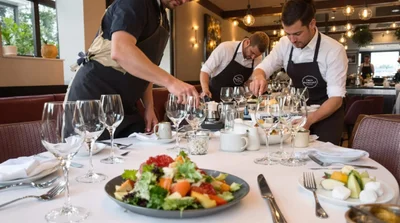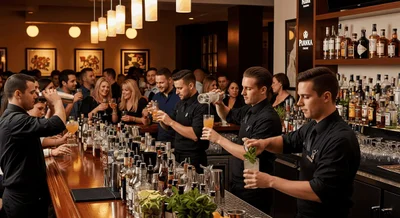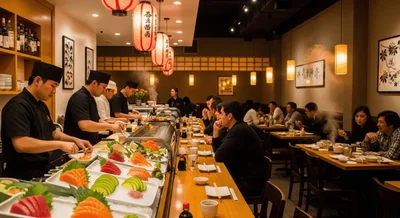
As a restaurant or bar owner, understanding table service styles isn’t just culinary trivia—it’s strategic ammunition. The right service model can elevate your brand, streamline operations, and justify premium pricing. The wrong one? Well, let’s just say it can leave your staff scrambling and your guests underwhelmed.
From the straightforward efficiency of American service to the theatrical elegance of gueridon carts, each style carries its own operational requirements, labor considerations, and guest expectations. So, whether you’re opening your first spot or refining your tenth, let’s break down the major types of table service and help you figure out which one fits your vision (and your bottom line).
American service: Plated service
How American service works
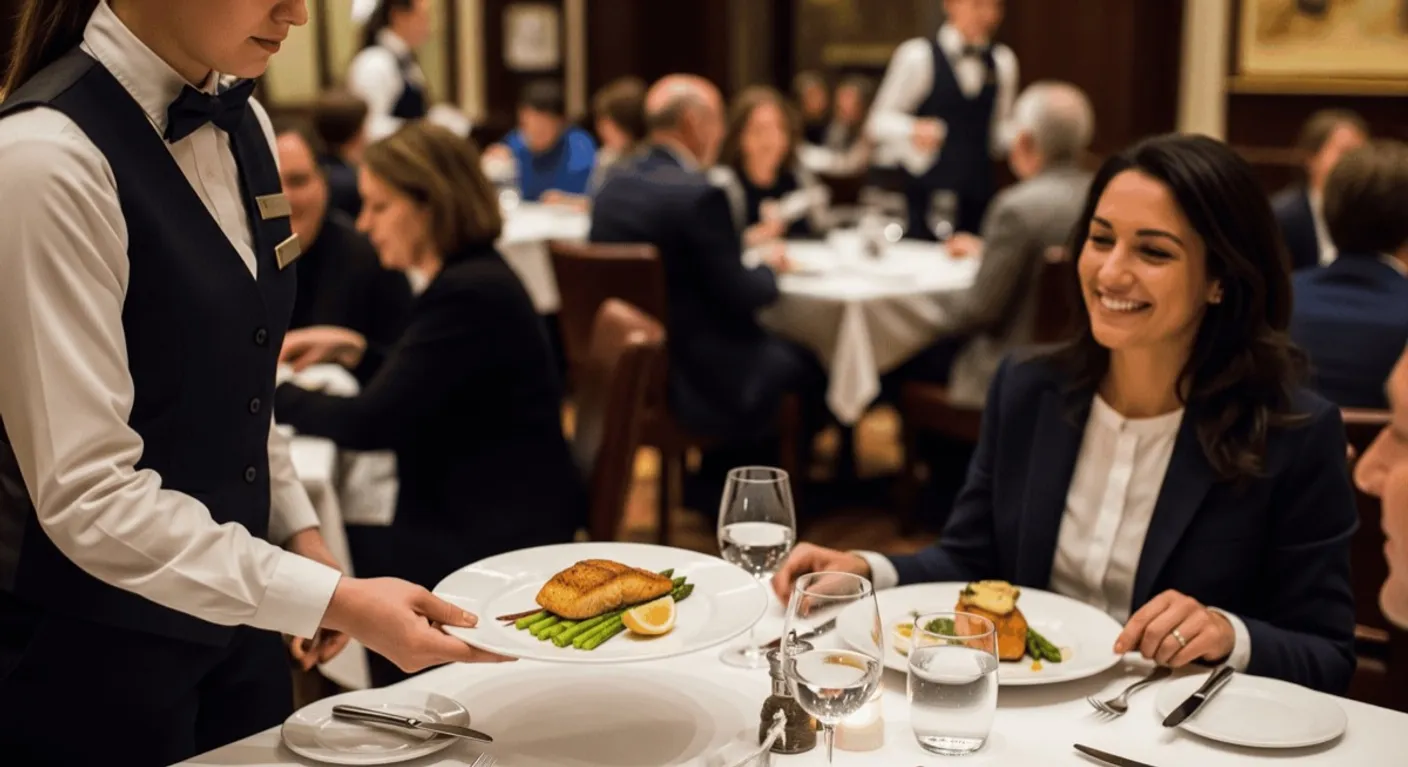
American service, also called plated service, is the workhorse of the restaurant industry. Food is plated in the kitchen by chefs, then carried directly to the table by servers. No tableside prep, no drama, no fuss—just hot food delivered efficiently from kitchen to guest.
Servers typically approach from the guest’s left, placing dishes with minimal disruption. It’s clean, it’s fast, and it requires less specialized training than more elaborate service styles. Your line cooks control portion sizes and presentation, which means consistency across every plate that leaves the pass.
For you as an owner, American service offers serious advantages: faster table turns, lower labor costs (since servers don’t need extensive tableside skills), and easier quality control. Your expo station becomes the command center where every plate gets a final once-over before it reaches the dining room.
Best venues for American service
American service thrives in mid-range restaurants, casual dining spots, and bustling establishments where efficiency matters. If you’re serving 200+ covers on a Saturday night, plated service keeps the wheels turning without bottlenecks.
It’s also ideal for restaurants with smaller front-of-house teams or limited tableside space. Urban venues with tight floor plans? American service is your friend. You don’t need extra room for carving stations or gueridon carts cluttering the aisles.
That said, don’t mistake simplicity for low-end. Plenty of upscale restaurants use American service precisely because it allows chefs to control every artistic detail. When your plating is the star of the show, letting it speak for itself makes perfect sense.
French service: Silver service
Characteristics of French service
French service is where elegance meets precision—a ballet performed inches from your guests. Servers present food on silver platters, then use a spoon and fork (held in one hand, a skill that takes practice) to artfully transfer portions onto each guest’s plate.
This style demands serious training. Your staff needs dexterity, grace, and the confidence to work under scrutiny. But when executed well? It’s mesmerizing. Guests feel pampered, attended to, special. The food becomes part of a larger performance.
Typically, French service involves two front-of-house professionals per station: a chef de rang(lead server) and a commisde rang (assistant). Together, they orchestrate the meal with synchronized timing. It’s labor-intensive, which is precisely why it commands premium pricing.
When to use French service
Reserve French service for high-end establishments where the experience justifies the cost—think upscale hotel restaurants, private dining rooms, or special occasion venues. Your clientele should expect (and appreciate) the extra attention and refinement.
It’s also perfect for smaller, intimate dining rooms where the ratio of staff to guests can support this level of individualized service. Trying to execute French service in a 150-seat bustling brasserie? You’ll burn through labor costs and create chaos.
If your concept centers on old-world sophistication or classic European dining traditions, French service reinforces that narrative. Just make sure your pricing structure and guest expectations align, because this level of service doesn’t come cheap—nor should it.
Russian service: Platter service
How Russian service operates
Russian service strikes a balance between presentation and practicality. Dishes are fully prepared in the kitchen, arranged beautifully on platters or in serving vessels, then brought to the table for display. Servers then portion food onto individual plates tableside, usually from the guest’s left.
It’s like American service’s fancier cousin. You get the visual impact of seeing the whole dish before it’s divided, which adds a touch of ceremony without the complexity of French service. Guests appreciate seeing what they’re about to eat in its full glory, and you maintain portion control since servers handle the plating.
This style requires trained staff who can portion evenly and gracefully, but it doesn’t demand the same technical mastery as French service. It’s a middle ground that adds flair without overwhelming your team or your budget.
Ideal settings for Russian service
Russian service shines in upscale-casual restaurants, banquet settings, and venues hosting private events or celebrations. It’s particularly effective for multi-course meals where presentation matters but speed is also a factor.
If you host weddings, corporate dinners, or prix fixe evenings, Russian service delivers that elevated experience guests expect without the labor intensity of true French service. Your kitchen can prepare dishes in batches, improving efficiency, while the dining room still gets a visual wow factor.
It also works beautifully for signature dishes you want to showcase—think whole roasted fish, carved prime rib, or elaborate vegetable platters. The presentation moment becomes Instagram-worthy, giving your guests (and yourmarketing) a memorable visual hook.
English service: Family style
Key features of English service
English service, often called family-style service, takes a communal approach. Large platters and bowls of food are placed directly on the table, and guests serve themselves, passing dishes around as if they’re at a family dinner. The host (in traditional English service) might carve or portion certain items, though in modern restaurants, that role often falls to servers.
This style creates a relaxed, convivial atmosphere. It encourages interaction, sharing, and a sense of abundance. There’s something primal and satisfying about reaching for a bowl of roasted vegetables or a platter of grilled meats—it feels generous, warm, informal.
From an operational standpoint, English service can be efficient. You’re serving multiple people with fewer trips, and guests control their own portions (which can reduce waste or… lead to over-serving, depending on your perspective). Staffing needs are moderate since servers aren’t doing complex tableside work.
Family-style service works brilliantly for certain concepts: rustic Italian trattorias, Southern comfort food spots, taverns, or anywhere you’re cultivating a homey, inclusive vibe. It pairs beautifully with shareable menus and communal dining tables.
Just keep in mind that some guests prefer individual plating and may find shared service less appealing for special occasions. It’s also trickier with dietary restrictions—someone with allergies needs to trust that shared serving utensils haven’t cross-contaminated. But in the right context, English service fosters connection and generosity that other styles can’t replicate.
Butler service: Passed service
Butler service is mobile hospitality at its finest. Instead of seating guests at tables, servers circulate through the room carrying trays of hors d’oeuvres, canapés, or drinks, offering them directly to guests. You’ve seen this at cocktail receptions, gallery openings, and standing events.
It’s all about flexibility and circulation. Guests mingle freely while servers weave through the crowd, ensuring everyone has access to food and beverages without queuing or waiting. It creates an elegant, flowing atmosphere—less structured than seated dining, more refined than a buffet.
For you as an owner or event planner, butler service offers serious advantages for standing receptions or pre-dinner cocktail hours. It keeps guests moving, encourages networking, and can be paired with other service styles throughout an event (say, butler-passed apps followed by a plated dinner).
Staffing is key here. You need enough servers to keep trays circulating without overwhelming guests or leaving anyone neglected. And your team should be trained in approach etiquette—knowing when to offer, when to step back, and how to read body language.
Butler service works best when you’re hosting events where mingling is the goal: cocktail parties, fundraisers, corporate mixers, or wedding receptions. It’s less suited to traditional restaurant settings, though some high-end establishments incorporate it during aperitivo hours or in lounge areas.
Gueridon service: Cart service
Gueridon service is pure theater. A small cart (gueridon) is wheeled tableside, where servers prepare, cook, carve, or flambé dishes in front of guests. Think Caesar salads tossed trackside, steak tartare mixed to order, or crêpes Suzette flamed with orange liqueur. It’s dinner and a show.
This style requires skilled, confident servers—essentially tableside chefs who can engage guests while executing technical preparations. Done well, it’s unforgettable. Done poorly… well, it’s awkward for everyone involved.
Gueridon service creates anticipation and engagement. Guests watch their meal come together, ask questions, and feel like active participants rather than passive diners. It’s personalized, interactive, and commands premium pricing because of the skill and spectacle involved.
From an operational angle, gueridon service is labor-intensive and space-hungry. You need room for carts to maneuver, skilled staff who can handle the pressure, and a dining room pace that allows for these performance moments without bottlenecking service.
This style fits upscale restaurants, classic steakhouses, old-school continental dining rooms, and any venue where tradition and showmanship are part of the brand. It’s also perfect for signature dishes that benefit from customization or dramatic presentation.
If you’re considering gueridon service, invest in training. Your servers need technical skills, yes, but also stage presence—they’re performers as much as they are hospitality professionals. When it works, though, it’s a differentiator that guests remember (and talk about) long after they’ve left.
Choosing the right service style for your restaurant
Table service isn’t just logistics—it’s storytelling. Every style carries its own narrative, its own expectations, its own operational demands. Whether you opt for the streamlined efficiency of American service, the theatrical elegance of gueridon carts, or the communal warmth of family-style dining, your choice shapes how guests experience your restaurant.
The best service style is the one that aligns with your concept, delights your guests, and keeps your team operating smoothly. It’s not about picking the fanciest option or the cheapest one—it’s about finding the sweet spot where your brand promise, operational reality, and guest expectations meet.
So, take a hard look at your dining room. What story are you telling? What experience are you crafting? And what service style will bring that vision to life, night after night? Because when you get it right, service becomes more than just how food reaches the table—it becomes the reason guests come back.
Frequently Asked Questions
How does gueridon service work in fine dining restaurants?
Gueridon service uses a tableside cart where skilled servers prepare, cook, carve, or flambé dishes in front of guests. This theatrical style creates engagement and personalization, commonly seen in upscale steakhouses and classic continental restaurants for signature dishes.
Can restaurants use multiple types of table service together?
Yes, many successful restaurants blend service styles strategically. For example, American service for main courses with gueridon carts for desserts, or family-style appetizers followed by plated mains. This flexibility enhances the dining experience while maintaining operational efficiency.
What factors should restaurant owners consider when choosing a table service style?
Owners should evaluate three key factors: guest expectations, concept alignment, and operational capacity. The service style must match your brand identity, fit within your team’s skill level and space constraints, and meet the experience level your target customers expect and value.