Here’s the thing about running a profitable restaurant (and yeah, profitable matters): the math isn’t just about how many butts fill seats, it’s about how quickly those seats refill throughout service. That’s table turnover rate, and it might be the most underrated metric in your entire operation. Too slow, and you’re leaving serious money on the table. Too fast, and you risk turning your establishment into a fast-food assembly line that sends diners running to Yelp with pitchforks.
In this guide, we’re breaking down everything you need to know about table turnover rate: what it actually is, how to calculate it without a degree in rocket science, why it’s quietly making or breaking your profitability, and, most importantly, proven strategies to optimize it without sacrificing the guest experience that keeps people coming back. Let’s turn those tables (pun absolutely intended).
Table turnover rate explained: definition and importance
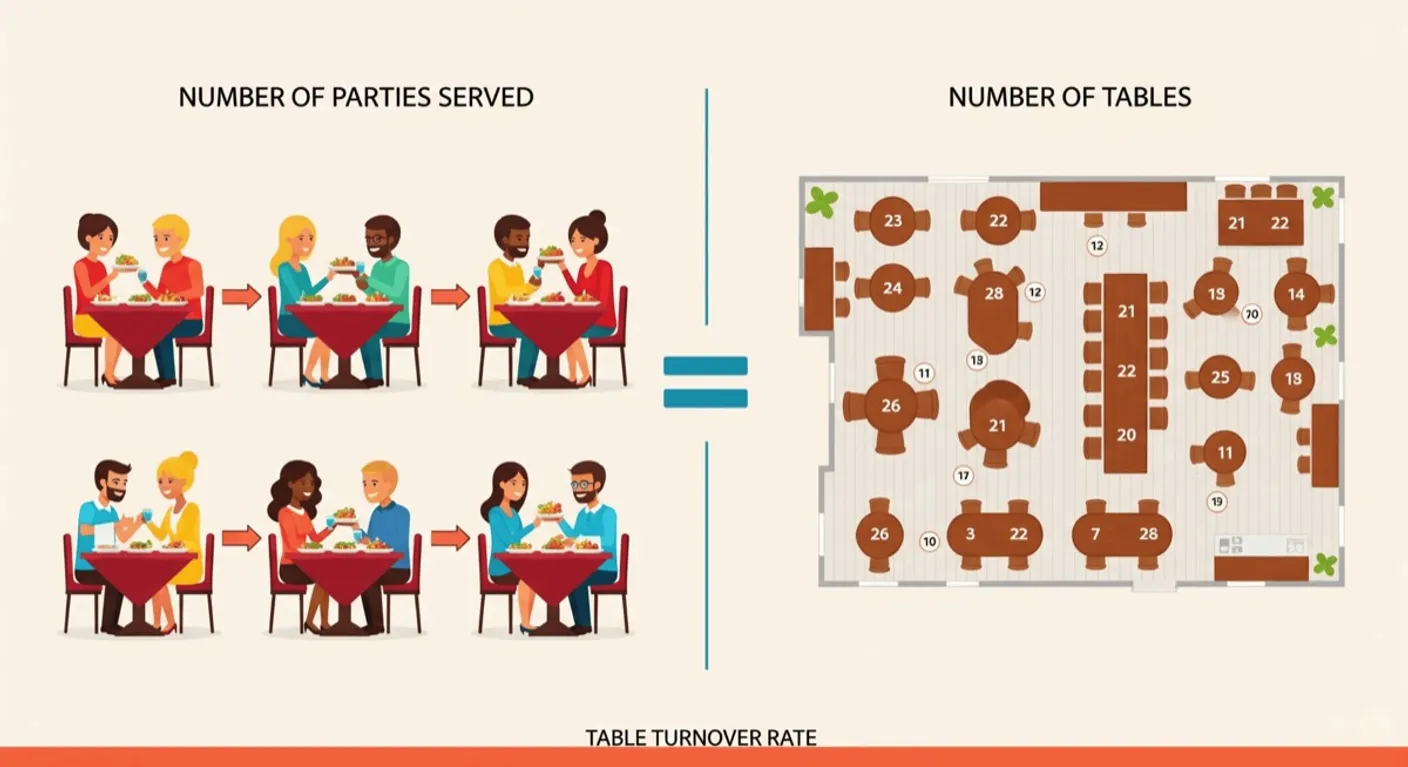
Table turnover rate measures how many times a single table serves different parties during a specific period—essentially your table’s productivity score.
When one party finishes and leaves, and another sits down, that’s one table turn. If this happens twice during dinner service, you’ve achieved two turns for that table.
This isn’t just a tracking metric—it reflects your entire operation’s efficiency. Kitchen speed, server performance, bussing, reservation timing, and menu design all impact this number.
High turnover maximizes seating capacity and serves more guests per shift. Low turnover means lost revenue while potential customers face long waits and walk away to competitors.
Remember: table turnover rate measures how many times tables turn, while table occupancy measures how full your restaurant is. You need both working together to optimize revenue.
How to calculate table turnover rate: simple formula
Good news: you don’t need a PhD in mathematics to figure this out. The formula is refreshingly straightforward:
Table Turnover Rate = Number of Parties Served ÷ Number of Tables
Let’s say you’ve got 20 tables in your restaurant. During dinner service (let’s call it 5 PM to 10 PM), you served 65 parties total. Your turnover rate for that shift is:
65 ÷ 20 = 3.25 turns per table
That means each table, on average, served just over three different parties during your dinner shift. Not too shabby.
But wait, there’s more nuance here. You’ll want to calculate this metric for different meal periods separately because breakfast, lunch, and dinner operate at totally different rhythms. Your breakfast turnover should be significantly higher than dinner (people generally don’t linger over scrambled eggs the way they do over a nice Cabernet and ribeye).
Also, track this for individual tables when possible. That corner booth that everyone requests? It might turn slower because it’s a destination table where people settle in. Your bar-height two-tops near the window? Probably turning much faster. Understanding these patterns helps you optimize your floor plan and reservation strategy.
Pro tip: Use your POS system to pull this data automatically. Most modern systems can generate reports showing average table duration, number of covers per table, and turnover rates by shift. If you’re still tracking this manually on a clipboard… well, it’s 2025, friend. Time to upgrade.
Proven strategies to boost turnover without sacrificing experience
Now for the good stuff, the actual tactics that’ll move your numbers without making guests feel like they’re eating at an airport food court.
Smart reservations
Your host stand is mission control for table turnover. A smart reservation strategy sets the stage for everything that follows.
First, stagger your reservations appropriately. Don’t book every table at 7 PM, that’s asking for chaos and service delays that’ll crater your turnover. Instead, stagger reservations in 15-minute intervals and mix party sizes strategically. Seat a quick two-top, then a four-top, then another two-top. This creates a natural flow that prevents bottlenecks in your kitchen and keeps tables clearing at different intervals.
Use reservation platforms wisely. Modern systems like OpenTable or Resy let you set estimated dining times based on party size and meal period. A party of two at lunch? 45 minutes. A six-top at dinner? 90 minutes. These systems can also help you manage walk-ins more effectively by showing real-time table availability.
Consider strategic overbooking (carefully) during high-demand periods if you know your average no-show rate. If 10% of reservations typically no-show and you have data to back that up, you can book slightly over capacity to compensate. Just have a backup plan (bar seating, lounge area, nearby spots for a comp drink) if everyone actually shows up.
Maximize bar and lounge seating for waiting guests. If someone’s going to wait anyway, get them spending at the bar. It keeps them happy, increases revenue, and the moment their table’s ready, you’re moving them smoothly into the dining room.
Kitchen efficiency
Your kitchen is the engine that drives turnover. If tickets are backing up or food’s taking forever, no amount of front-of-house wizardry will help.
Menu engineering is your secret weapon. Analyze your dishes: which items take forever to prepare during rush? Which ones fly out of the kitchen? Consider limiting or removing slow-cooking items during peak periods, or batch-prep components in advance. Your menu doesn’t need 47 options, it needs the right options that your team can execute quickly and consistently.
Kitchen display systems (KDS) replace paper tickets and help cooks prioritize and pace orders. They improve communication between front and back of house, reduce errors, and speed up ticket times. If you’re still using a printer and handwritten tickets in 2025… friend, we need to talk.
Pre-bus tables actively. Train servers to clear plates between courses rather than letting them stack up. This does two things: keeps the table cleaner and more comfortable for guests, and signals to them (subtly) that service is progressing. When the check is paid, your busser should be swooping in within 60 seconds to turn that table.
Optimize your payment process. Bring the check promptly when requested (don’t make guests hunt you down). Consider tableside payment devices that let servers process cards right at the table instead of running back and forth to a POS station. Every minute saved here adds up.
Staff training
Your team makes or breaks your turnover rate, but only if you train them properly.
Teach your servers to read tables. An experienced server knows when a party’s lingering over conversation (and might want dessert) versus when they’re clearly finished and just waiting for the check. Train your staff to pick up on these cues and act accordingly without being pushy.
Carry out smooth service choreography. Your servers, bussers, and runners should move like a synchronized dance team. Who greets the table? Who delivers drinks? Who clears plates? Who runs food? When everyone knows their role and timing, service speeds up dramatically.
Empower servers to make decisions that speed up service. If a guest asks for a recommendation, don’t send them into an analysis paralysis menu journey. Train servers to read the situation and confidently guide guests toward great choices quickly.
Pre-bus, pre-set, and anticipate. Great servers don’t wait for guests to ask for water refills or extra napkins, they anticipate needs. This keeps the meal flowing smoothly and prevents those awkward pauses where guests are waiting for something.
Track individual server metrics. Which servers consistently turn their sections faster? What are they doing differently? Create some friendly competition (with incentives) around efficiency metrics, but always tied to guest satisfaction scores. Speed without quality is just… fast bad service.
Common turnover mistakes that cost you money
Let’s talk about the silent killers, those operational hiccups that torpedo your turnover without you even realizing it.
Mistake #1: Slow drink service. If it takes 15 minutes to get water and cocktails to a table, you’ve just added 15 minutes to that table’s total time. Period. Your bar needs to be fast, efficient, and properly staffed during peak hours. No excuses.
Mistake #2: Inefficient table layouts. That awkward table placement that makes it hard for servers to navigate? It’s costing you. Every extra step your staff takes adds time. Every bottleneck near the kitchen door slows service. Audit your floor plan regularly and adjust as needed.
Mistake #3: Menu paralysis. Overly complicated menus with too many options slow down ordering. Guests spend 10 minutes deliberating, then ask the server a million questions, then change their minds. Streamline your menu to your best dishes, the ones that represent your concept, that you can execute flawlessly, that guests order reliably.
**Mistake #4: Letting guests linger unconsciously.**Sometimes guests genuinely lose track of time, they’re not trying to camp, they just don’t realize they’ve been there for two hours. A skillful server knows how to politely signal that the meal is winding down: clearing all dishes, presenting the check proactively, using gentle body language cues. It’s hospitality, not hostility.
Mistake #5: Understaffing peak periods. You can’t turn tables quickly if you don’t have enough hands on deck. Analyze your busiest times and staff accordingly. That extra busser or server during the rush pays for themselves multiple times over in increased turnover.
Mistake #6: Slow POS systems or clunky payment processing. If your technology is ancient and your servers spend five minutes per table fighting with the payment system, that’s time you’re bleeding. Invest in modern, fast systems that actually work.
Mistake #7: Ignoring the power of pre-shifts. A five-minute pre-shift meeting before service can align your entire team on specials, 86’d items, VIP reservations, and strategy for the night. This prevents mid-service confusion that slows everything down.
Master table turnover for maximum restaurant profits
Table turnover rate is one of your most powerful revenue levers—but only when approached strategically, not frantically. Successful restaurants eliminate inefficiencies while preserving the guest experience that drives repeat business.
You now have the formula, benchmarks, and proven strategies. The question is: what will you do with this knowledge?
Start small. Pick one strategy from this guide and implement it this week—whether it’s staggering reservations, timing tickets, or training servers on efficient pre-bussing. Track results, adjust, and build on what works.
Restaurants that master table turnover while maintaining hospitality serve more guests, generate more revenue, and create better experiences—while giving owners and managers room to breathe.
Frequently Asked Questions
What is a good table turnover rate for a restaurant?
A good table turnover rate depends on your concept. Quick-service restaurants should aim for 4-6+ turns during peak hours, casual dining typically sees 2-3 turns per dinner service, while fine dining establishments average 1-2 turns per evening, which is perfectly normal given the upscale experience expected.
How can I improve table turnover without rushing guests?
Focus on eliminating wasted time, not value time. Streamline drink service, optimize payment processing with tableside devices, train servers to read tables and pre-bus actively, and stagger reservations strategically. The goal is removing delays while preserving the dining experience guests expect from your concept.
Why does table turnover rate matter for restaurant profitability?
Table turnover directly impacts revenue without increasing fixed costs. Improving turnover from 2.5 to 3.0 turns per table means serving 20% more guests in the same space. With a $75 average check and 20 tables, that’s an extra $750 per service or over $225,000 annually.
What is the difference between table turnover rate and table occupancy?
Table turnover rate measures how many times tables serve different parties during a shift, while table occupancy measures how full your restaurant is at any given moment. Both metrics need to work in harmony to truly optimize revenue potential and operational efficiency.