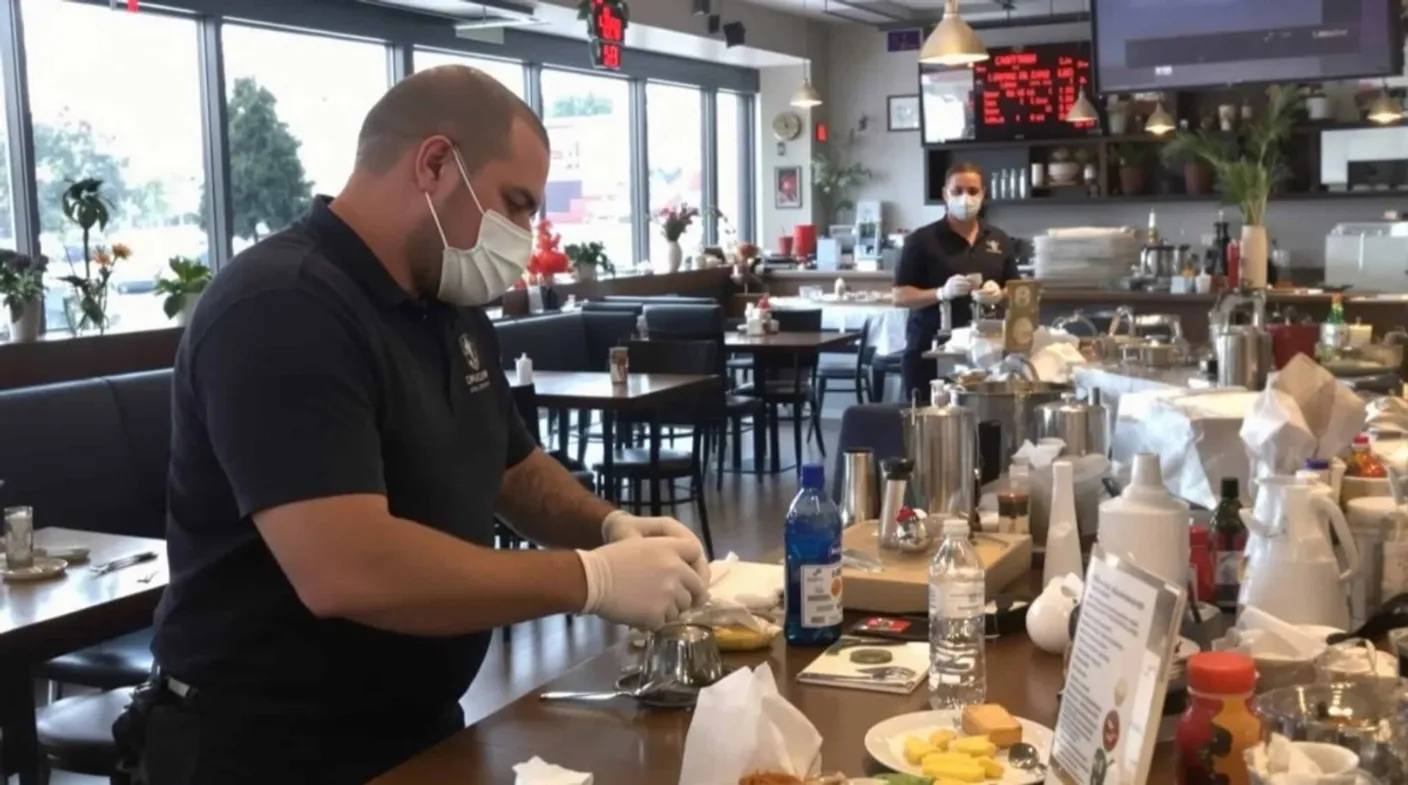
Every year, health inspectors visit thousands of restaurants armed with clipboards and eagle eyes for potential violations. They check everything from food temperatures to employee handwashing habits. These inspections aren’t bureaucratic paperwork – they’re your first line of defense against foodborne illness.
Understanding how restaurant health inspections work empowers you to make smarter dining choices. You’ll learn what inspectors look for, how violations are scored, and how to interpret those letter grades that influence your meal decisions.
How restaurant health inspections work: process and frequency
Restaurant health inspections follow a systematic approach designed to protect customers while keeping businesses compliant. Understanding this process helps restaurant owners prepare effectively and maintain standards that keep doors open and reputations intact.
Inspection process overview
When health inspectors enter a restaurant, they follow a comprehensive checklist covering every aspect of the food service operation. Inspections typically begin with reviewing permits and employee certifications before moving into the establishment’s core areas.
Inspectors use point-based scoring systems where violations carry different weights depending on severity. Critical violations—like improper food temperatures or cross-contamination issues—can cost significant points and potentially shut restaurants down immediately. Non-critical violations, such as minor equipment maintenance issues, result in fewer point deductions but still require attention.
| Violation Type | Point Deduction | Examples |
|---|---|---|
| Critical | 3-5 points | Temperature abuse, cross-contamination |
| Major | 2-3 points | Improper handwashing facilities |
| Minor | 1-2 points | Missing labels, worn equipment |
The entire process usually takes 1-3 hours depending on establishment size and complexity. Inspectors document everything with photos and detailed notes, providing preliminary reports before leaving. This creates a roadmap for maintaining excellence in food safety practices.
Frequency of inspections
Health inspection frequency depends on several factors reflecting an establishment’s risk profile. High-risk operations—sushi bars, establishments serving raw foods, or venues with complex preparation processes—typically face inspections every 6-12 months.
Standard restaurants usually see inspectors annually, while lower-risk establishments like coffee shops or bakeries might go 18-24 months between routine visits. These timelines can change dramatically based on inspection history and complaint volume.
| Risk Level | Inspection Frequency | Examples |
|---|---|---|
| High Risk | Every 6-12 months | Sushi bars, raw food service |
| Medium Risk | Every 12-18 months | Full-service restaurants |
| Low Risk | Every 18-24 months | Coffee shops, bakeries |
Previous inspection scores play a huge role in determining visit frequency. Consistently high scores might earn longer intervals between inspections, while repeated violations could trigger more frequent visits or unannounced follow-ups. Some jurisdictions use risk-based approaches where operational complexity, customer volume, and violation history factor into scheduling algorithms.
Key areas inspected: food safety, hygiene and equipment checks
Health inspectors follow systematic checklists covering five critical areas. Understanding these focus areas helps with effective preparation and compliance maintenance.
Food safety and temperature control
Temperature control is central to every inspection. Walk-in coolers must maintain 32-40°F (0-4°C), while hot food stays above 140°F (60°C) during service. Inspectors check thermometer accuracy and test food temperatures with calibrated probes.
The danger zone (41-135°F/5-57°C) poses the biggest risk. Inspectors verify proper thawing procedures, adequate reheating to 165°F (74°C), and correct cooling methods. They examine HACCP logs and temperature records—digital monitoring systems streamline documentation.
Critical violations occur when potentially hazardous foods sit in the danger zone over four hours, triggering automatic point deductions and mandatory re-inspection within 48 hours.
Kitchen cleanliness and sanitation
Kitchen cleanliness reflects operational standards. Inspectors examine all surfaces, from scarred cutting boards to areas behind equipment and inside ice machines. They check for cross-contamination risks, proper sanitizer concentrations, and deep cleaning evidence.
Three-compartment sinks need **110°F (43°C)**wash water with properly concentrated sanitizer solutions tested via strips. Color-coded cutting boards prevent cross-contamination, while separate prep areas for raw proteins maintain safety.
Food storage is equally critical: raw proteins on bottom shelves, covered ready-to-eat items on top, and first-in-first-out rotation to prevent spoilage.
Employee hygiene practices
Staff hygiene habits determine inspection success. Inspectors observe proper handwashing (20 seconds with soap), hair restraints, clean uniforms, and wound coverage. Employees must wash hands between tasks—touching raw chicken then ready-to-eat items without handwashing triggers violations.
Hand sinks must remain accessible with soap, towels, and 100°F (38°C) water. Cluttered hand sinks result in automatic deductions. Proper glove technique requires handwashing before gloving and changing gloves between tasks.
Current food handler certifications need display, with managers requiring additional training. Digital platforms can track certifications and send renewal reminders.
Pest control measures
Effective pest control goes beyond monthly exterminator visits. Inspectors evaluate integrated approaches, examining entry points, moisture control, and sanitation practices. They check door seals, window screens, and utility line gaps.
Rodent evidence—droppings, gnaw marks, or nests—results in serious deductions. Flying insects signal sanitation breakdowns. Proper waste management includes sealed dumpsters positioned away from doors and immediate spill cleanup.
Professional documentation must show regular service visits and treatments, with sticky traps monitoring activity between calls.
Equipment maintenance and safety
Well-maintained equipment ensures food safety and demonstrates professionalism. Inspectors examine refrigeration temperatures, clean coils, and door seals. Commercial dishwashers must reach 180°F (82°C) final rinse or maintain proper chemical concentrations.
Ventilation systems need regular cleaning to prevent grease buildup and fire hazards. Fire suppression systems require current inspection tags, and extinguishers need monthly checks and annual servicing.
Poor equipment condition—rust, broken gaskets, malfunctioning thermostats—creates safety risks and costly violations.
Restaurant grades explained: scoring systems and violations
Health inspection scores function as restaurant report cards that directly impact bottom lines and reputations. Each state has its own grading system, but all share the same goal: translating complex inspection findings into clear, customer-friendly information.
Scoring systems by state
Scoring systems depend entirely on location. California operates on a 100-point scale where anything above 90 earns an “A” grade, while New York City uses a different approach—lower scores mean better performance, with 0-13points landing an “A.”
Some states embrace traditional letter grades (A, B, C), while others prefer numerical scores or color-coded systems. Florida restaurants display percentage scores alongside letter grades, giving customers precise performance pictures. Texas takes a pass/fail approach in many counties.
The key difference lies in how violations get calculated. Massachusetts deducts points based on violation severity and frequency, while Nevada uses weighted systems heavily penalizing critical infractions. Understanding local systems is essential for planning compliance strategies and training teams effectively.
Critical vs non-critical violations
Not all violations carry equal weight. Critical violations directly threaten public health—improper food temperatures, cross-contamination, or inadequate handwashing facilities. These violations pack punches, often resulting in 4-7 point deductions per incident and potentially triggering follow-up inspections or temporary closures.
Non-critical violations focus on maintenance and general cleanliness issues—burned-out light bulbs, minor equipment wear, or missing signage. These typically cost 1-2 points each and won’t shut down operations, but they add up quickly.
Address critical areas first during daily operations. Temperature logs, employee hygiene protocols, and proper food storage practices should be top priorities. Non-critical items make excellent weekly maintenance checklist items.
Grade meanings
Letter grades become public faces, displayed prominently where every customer can see them before deciding whether to stay or leave. Most states follow similar grade brackets, though specific point ranges vary.
“A” grades typically require 85-100 points (or 0-13 deductions in reverse systems), signaling excellent food safety practices. This grade attracts customers and builds trust—studies show restaurants with “A” grades see 5-7% higher customer traffic than “B” counterparts.
“B” grades usually fall in the 70-84 point range, indicating good practices with improvement room. While not devastating, this grade prompts customer hesitation or seeking alternatives, especially in competitive markets.
“C” grades (often 60-69 points) signal significant compliance issues and typically require immediate corrective action. Some jurisdictions mandate re-inspection within 30 days, and customer traffic often drops dramatically.
Inspection testing methods: temperature, swabs and documentation
Health inspectors employ sophisticated testing methods that can make or break inspection results. Understanding these techniques helps with effective preparation and demonstrates the scientific rigor behind every health department visit.
Temperature monitoring
Inspectors bring digital probe thermometers to check refrigerated items, freezer storage, and hot-holding equipment with precision. They test centers of thickest proteins, probe multiple spots in walk-in coolers, and verify hot food bars maintain proper temperatures.
Cold foods must stay below 41°F (5°C), while hot foods need to hover above 140°F (60°C). Inspectors perform spot checks on recently delivered items and may ask for demonstrations of temperature-taking procedures. They also calibrate instruments against establishment equipment.
Keep calibrated thermometers visible and document daily temperature logs. When inspectors see religious temperature monitoring, it signals professionalism and leads to smoother interactions throughout inspection processes.
Surface swab testing
Surface swab testing involves collecting samples from cutting boards, prep surfaces, and equipment to detect harmful bacteria like Salmonella, E. coli, and Listeria. While not every jurisdiction employs this regularly, it’s increasingly common after foodborne illness complaints or during follow-up inspections.
Inspectors typically target high-risk areas: main prep stations, meat slicing equipment, and surfaces near hand sinks. They use sterile swabsto collect samples for laboratory analysis. Results usually take 24-48 hours, but positive findings can trigger immediate follow-up visits.
Maintain detailed cleaning logs and use color-coded cutting boards to prevent cross-contamination. These practices significantly reduce the likelihood of problematic swab results.
Documentation review
Paperwork tells operational stories when inspectors aren’t around. Employee training records, temperature logs, cleaning schedules, and vendor certifications all come under review. Missing documentation can sink otherwise stellar operations.
Inspectors particularly focus on HACCP plans, employee health policies, and supplier verification records. They cross-reference temperature logs against equipment maintenance records, looking for patterns indicating systemic issues.
Most jurisdictions require maintaining records for specific periods, typically 90 days to one year. Organized documentation demonstrates operational maturity and correlates with fewer violations overall.
How to read restaurant inspection reports and violation codes
Accessing restaurant inspection reports and understanding what those codes mean can save headaches. This serves as a decoder ring for navigating health department databases.
Online database navigation
Most health departments have moved inspection records online. These databases typically appear on local health department websites under sections like “Food Services” or “Environmental Health.”
Search for establishments using business names or permit numbers. If restaurant names include common words like “Grill” or “Café,” try searching with just unique portions for fewer false hits. Many systems allow filtering by inspection date, violation type, or geographic area.
These databases are information goldmines. Track improvement over time, benchmark against neighborhood competitors, and spot patterns in when inspectors visit certain areas. Some jurisdictions offer email alerts when new reports are posted.
Reading violation codes
Violation codes are health department shorthand that read like alphabet soup until you crack the system. Each code corresponds to specific regulations, and understanding them helps prioritize fixes and train staff more effectively.
Critical violations typically start with numbers like “01” or letters like “C”—red-flag items that can shut establishments down. Non-critical violations often use higher numbers or different letter combinations.
Many codes have subcategories. Temperature violations might specify hot holding, cold storage, or cooking temps. This specificity provides roadmaps to targeted training rather than addressing just symptoms.
Understanding reinspection results
Reinspections test whether establishments learned from mistakes or just temporarily fixed issues. These follow-up visits typically happen within 7-30 days of original inspections, depending on violation severity and local policies.
Pay attention to reinspection narratives. Inspectors note whether violations were “corrected,” “in progress,” or “repeat offenses.”“Corrected” status shows swift action, while “repeat offense” signals deeper operational issues.
Successful reinspections can boost standing with health departments. Inspectors appreciate genuine commitment to improvement rather than bare-minimum compliance. Use time between inspections strategically to implement lasting changes.
Master restaurant inspections for better food safety success
Restaurant industry success depends heavily on understanding and excelling at health inspections. These aren’t just regulatory hurdles—they’re opportunities to showcase commitment to food safety and customer wellbeing.
By mastering inspection processes, you’ll build customer trust and protect bottom lines. Consistent preparation beats last-minute scrambling every time.
Stay proactive with food safety practices and view each inspection as a chance to demonstrate professionalism. Customer health and restaurant reputation both depend on maintaining high standards year-round.
Frequently Asked Questions
Do health inspection standards vary by state?
Yes, health departments operate with completely different scoring systems and priorities across jurisdictions. For example, California uses a 100-point system where points are deducted for violations, while New York City starts at zero and adds penalty points. Additionally, some departments focus heavily on paperwork and permits, while others prioritize actual food handling practices, meaning a spotless kitchen could earn an “A” in one city but struggle to achieve a “B” in another.
What are the most common health violations in restaurants?
1\. Improper Food Storage, 2. Poor Employee Hygiene, 3. Unsanitary Food Prep Areas, 4. Equipment Maintenance Issues, 5. Improper Food Handling