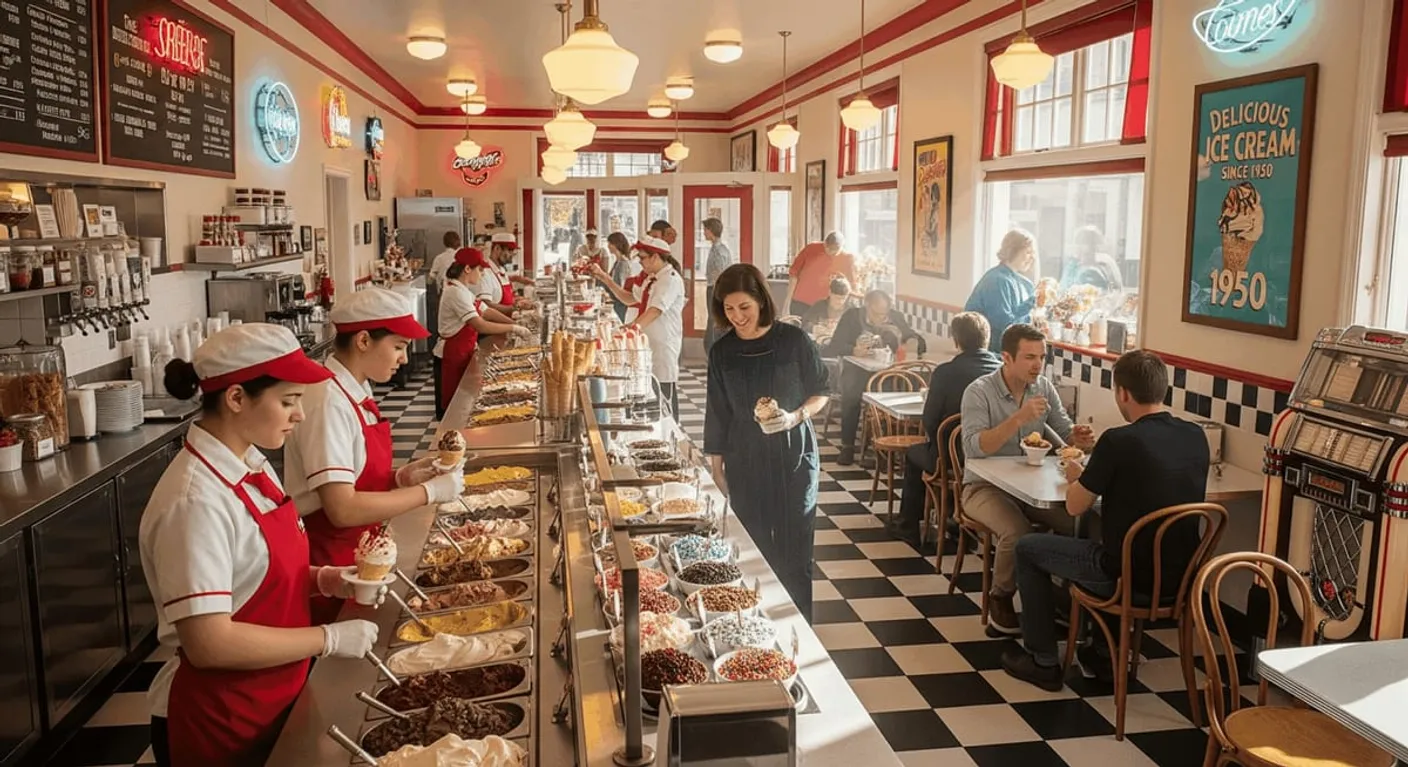
Running an ice cream shop isn’t just about churning out frozen treats and hoping for sunny weather (though that definitely helps). It’s about crafting an experience, building a brand, and yes, mastering the operational ballet that keeps any food service business humming. You’ll need a solid business plan, the right location, quality suppliers, and a team that actually cares about what they’re serving. And unlike your typical restaurant venture, you’re dealing with seasonality that can make or break your year, equipment that requires special attention, and inventory that literally melts if you mess up.
The good news? Your hospitality background gives you a serious edge. You already understand food costs, customer service, and how to create an atmosphere people want to return to. Now it’s time to channel that expertise into something that’ll have lines out the door come summer. Let’s walk through exactly how to build an ice cream store that doesn’t just survive, but thrives.
Developing your ice cream business plan: essential steps
Your business plan is the roadmap that’ll keep you from wandering into financial disaster. It’s not just paperwork to impress investors, it’s your reality check.
Start with your concept. Traditional flavors or Instagram-worthy creations? In-house production or supplier partnership? These decisions shape your equipment needs and target demographic. Don’t try to be everything to everyone.
Be brutally honest with financial projections. Ice cream is seasonal—expect 60-70% of annual revenue in just 4-5months. Factor in $50,000-$200,000 in startup costs plus six months operating expenses. Hidden costs include equipment maintenance, liability insurance, and backup power for inevitable freezer failures.
Define your competitive advantage clearly—locally-sourced ingredients, unique flavors, or fast service. It must be defensible and authentic. Gimmicks fade, quality endures.
Choosing the right location: high-traffic spots for success
Location isn’t everything, it’s the only thing. And the rules for ice cream differ slightly from your typical restaurant.
High foot traffic is non-negotiable, but it needs to be the right kind of traffic. Target tourist areas, shopping districts, parks, beaches, and family entertainment centers—people already in leisure mode, not rushing commuters. Drive-by visibility is crucial: invisible stores don’t get spontaneous stops.
Parking can make or break you. Walk-up traffic is gold, but families with kids prefer pulling up close. If your location requires circling the block three times, you’re losing customers to convenience.
Competition analysis matters, but don’t let it paralyze you. Being near other food establishments can boost traffic—people are already thinking about eating. Just avoid being the fourth ice cream shop in two blocks. Also, check neighbors’ closing times; if everything shuts down at 6 PM, your evening traffic suffers.
One overlooked factor: temperature control beyond your freezers. If your storefront becomes a sauna every summer afternoon, customers won’t linger and staff will be miserable. Adequate HVAC isn’t optional—it’s operational necessity.
Securing permits and licenses: legal requirements guide
Welcome to the bureaucratic maze. Ice cream brings its own paperwork beyond your restaurant experience.
You’ll need standard business licenses, food service permits, and health department approval—often more stringent for frozen desserts. Some jurisdictions require separate manufacturing permits if you’re making ice cream on-site. Don’t assume your restaurant experience covers everything; regulations vary wildly by state and county.
Insurance gets interesting beyond general liability. Consider product liability for food poisoning claims and property insurance that covers expensive refrigeration equipment. Standard policies often exclude freezer breakdown and spoilage coverage—crucial when a failed chest freezer takes $5,000 of inventory with it.
Serving alcohol (ice cream cocktails, beer floats) requires liquor licensing, adding months to your timeline and potentially tens of thousands in fees. Weigh this carefully against revenue potential.
Employee requirements—workers’ comp, unemployment insurance, proper classification—follow restaurant rules. However, many ice cream shops hire minors, bringing additional labor law compliance around working hours and hazardous equipment. Stay compliant or face expensive penalties.
Sourcing quality ingredients and equipment essentials
Your ingredients and equipment are the backbone of your operation. Skimp here, and everything else falls apart.
Finding suppliers
Quality ingredients aren’t negotiable—customers can taste the difference between real vanilla and artificial flavoring. Build relationships with dairy suppliers who guarantee consistent butterfat content and freshness. Local dairies offer better products and marketing stories, but ensure they can handle your volume with backup plans for supply interruptions.
For mix-ins and toppings, wholesale restaurant suppliers work for basics, but specialty items like imported chocolates or artisan caramel require dedicated sourcing. Maintain multiple suppliers for core ingredients—when your primary dairy shuts down for equipment failure, you need a backup that doesn’t compromise quality.
Consider seasonal availability. Fresh fruit flavors shine in summer, but decide whether you’ll maintain consistency year-round or rotate flavors seasonally. Both approaches work but require different supplier strategies.
Essential equipment needs
Your equipment list includes dipping cabinets, batch freezers, and blast freezers, but buy commercial-grade everything—consumer equipment won’t survive one summer season.
Dipping cabinets must maintain 6-8°F for optimal scooping while being constantly displayed. Glass tops showcase flavors but require constant cleaning and can create glare.
If manufacturing on-site, your batch freezer is your most critical investment: $15,000-$40,000for quality commercial machines. Soft-serve machines cost less ($2,000-$8,000) but require daily deep cleaning.
Don’t forget essentials: heavy-duty dishwashers (you’ll use hundreds of spoons daily), adequate refrigeration, proper ventilation, and emergency repair relationships. When equipment fails on a 95°F Saturday with lines out the door, you need help now, not Monday morning.
Creating your menu and pricing: profitability strategies
Your menu balances creativity with profitability. Start with 12-16 core flavors covering classics, fruits, indulgent options, and 1-2 signature flavors. Rotate 3-4 seasonal specials to retain customers and test new ideas.
Size portions strategically with three options, making your medium the value sweet spot. A generous “small” creates positive experiences; an oversized “large” generates social media buzz.
Calculate your true cost per scoop including labor, overhead, and waste, then apply a 3-4x multiplier. That $1.25 scoop should sell for $4-5 minimum. Premium ingredients justify premium pricing—”Madagascar Bourbon Vanilla” commands more than plain “vanilla.”
Focus on high-margin upsells: toppings (10¢ cost, 75¢ sale), waffle cones (pennies more cost, $1 premium), and specialty items like sundaes and milkshakes that differentiate you from competitors.
Monitor your sales mix closely. Adjust through strategic promotion and placement—put high-margin flavors at eye level. If everyone orders expensive items, you’ll either profit greatly or constantly run out. If everyone chooses basics, you’re missing revenue opportunities.
Hiring and training staff: building your team effectively
Your staff makes or breaks the customer experience. An enthusiastic scooper creates regulars; a disengaged employee drives customers away.
Ice cream shops typically employ younger workers with higher turnover. Cast a wide net: local schools, community boards, and part-time parents. Prioritize people skills over experience—you can teach scooping in an hour, but not genuine friendliness. During interviews, ask “What’s your favorite ice cream flavor and why?” to gauge personality.
Keep training thorough but efficient. Cover scooping technique, food safety, cash handling, and your POS system. Train staff on customer interaction: offering samples strategically, making recommendations, and handling indecisive customers.
Create systems for peak periods. When it’s 85°F with 30 people in line, staff must move fast without sacrificing quality. Practice speed drills during slow times and eliminate bottlenecks.
Pay competitively, especially shift leaders who can open/close independently. Replacing trained mid-season employees costs more than paying an extra dollar per hour for retention. Give staff free ice cream during shifts—nothing kills morale like denying samples of what they’re selling all day.
Marketing your store: strategies that drive customers
Marketing an ice cream shop relies on visual appeal and community connection. Your photogenic product is your biggest asset.
Social Media: Use Instagram and TikTok to showcase colorful, indulgent treats. Post daily during peak season featuring new flavors, happy customers, and behind-the-scenes content. Encourage user-generated content with small incentives like free toppings for tagged posts.
Local Partnerships: Cross-promote with nearby businesses, sponsor little league teams, and participate in community events. Ice cream trucks at festivals serve as mobile billboards while generating revenue.
Loyalty Programs: Simple punch cards (buy 9, get the 10th free) or digital programs through your POS system encourage repeat visits and provide valuable customer data.
Traditional Marketing: Eye-catching sidewalk signs, appealing window displays, and consistent branding build recognition. Your exterior should clearly signal “ice cream.”
Timing: Start building buzz 4-6 weeks before peak season. Run soft openings to work out issues before your grand opening. Offer locals-only specials during slow periods.
Email Marketing: Collect emails at checkout with next-visit discounts. Send engaging monthly newsletters featuring recipes, flavor spotlights, and staff profiles—not just coupons.
Managing daily operations: systems for smooth running
Daily operations leverage your restaurant experience with frozen-specific considerations.
Inventory Management: Implement strict first-in, first-out rotation to prevent freezer burn on premium flavors. Track which items move quickly versus slow movers, adjusting production accordingly. Don’t over-project demand for experimental flavors.
Par Levels: Flex inventory with weather and local events—heatwaves and festivals can triple normal volume. Use POS data to identify patterns while keeping core flavors well-stocked. Use seasonal flavors to manage excess capacity.
Maintenance: Daily cleaning of customer surfaces, weekly equipment deep-cleans, monthly professional maintenance checks. Your freezers and batch machines are under constant stress—catch small issues before they become failures. Create opening/closing checklists for staff.
Cash Flow: Most annual revenue happens in 4-5 months, but expenses remain year-round. Build cash reserves during peak season for lean months. Consider seasonal products, catering, and corporate events for winter revenue.
Customer Service: Handle complaints with the same professionalism, but remember customers are buying treats—they’re usually in good moods and problems resolve easier. Empower staff to make immediate corrections.
Metrics: Track sales per labor hour, average ticket size, profitable items, and peak periods. Use POS data to guide staffing, inventory, and menu decisions.
Running an ice cream store: keys to long-term success
Running an ice cream store successfully combines hospitality expertise with specialized knowledge of frozen desserts, seasonality, and customer experience. You’re selling happiness and memories, not just dessert.
Master the fundamentals: solid planning, strategic location, quality ingredients, trained staff, and operational excellence. What separates thriving shops from failures is attention to detail and market adaptability.
Success requires balancing creativity with discipline, quality with cost control, treating every scoop as an opportunity to build loyalty. Get the fundamentals right, and you’ll have profitable lines out the door and a genuinely enjoyable business to run.
Frequently Asked Questions
Is an ice cream business profitable?
Running an ice cream store can be profitable if managed well. Success depends on factors like location, product quality, pricing, and efficiency. Ice cream has high-profit margins due to low ingredient costs and added premium items. Sales drop in colder months but offering hot drinks, seasonal treats, and promotions helps maintain income.
What are the weaknesses of an ice cream business?
**1\. Seasonality and Weather Dependency**: Ice cream sales peak in summer but drop during colder months or bad weather. **2.** **Intense Competition**: The market is crowded with big brands and local stores. **3.** **Storage and Inventory Issues**: Ice cream requires costly, energy-intensive freezers. 4. **High Operational Costs**: Expenses for equipment, rent, labor, and quality ingredients add up.